What Is Jebel Ali Dubai? The Ultimate Guide to Its Strategic Importance, Economic Growth, Business Opportunities, and Modern Development
Introduction
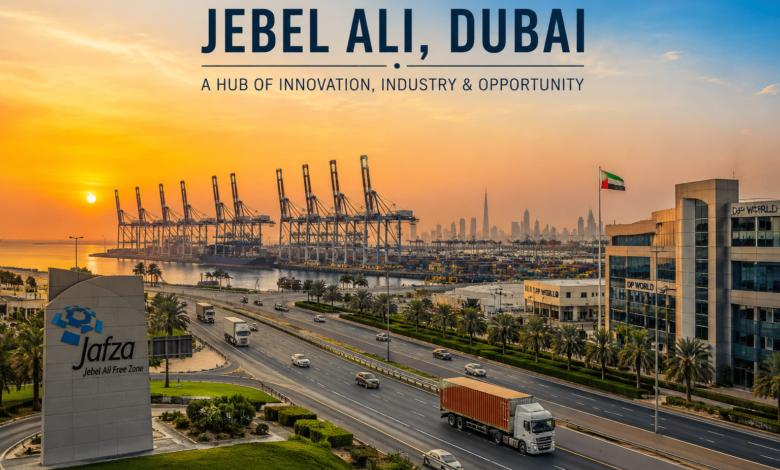
Jebel Ali Dubai is one of the most significant economic and industrial regions in the United Arab Emirates. Located in the southwestern part of Dubai, Jebel Ali has transformed from a relatively undeveloped coastal area into a world-renowned hub for trade, logistics, manufacturing, and international business. Today, it is home to the Middle East’s largest port, one of the world’s most successful free zones, and a rapidly growing business ecosystem that supports global commerce.
The importance of Jebel Ali extends far beyond Dubai’s borders. Through its strategic location, world-class infrastructure, and business-friendly environment, the area has become a gateway connecting Asia, Europe, Africa, and the Middle East. This article explores the history, economic significance, business opportunities, and modern development that make Jebel Ali Dubai one of the most influential commercial centers in the world.
Understanding Jebel Ali Dubai
Jebel Ali is a major district within Dubai that plays a critical role in the emirate’s economy. The area encompasses several important developments, including Jebel Ali Port, Jebel Ali Free Zone (JAFZA), industrial parks, logistics facilities, residential communities, and transportation networks. Over the decades, it has evolved into a comprehensive economic ecosystem designed to support global trade and investment.
The region’s development began as part of Dubai’s broader strategy to diversify its economy beyond oil revenues. By investing heavily in infrastructure and trade facilities, Dubai successfully transformed Jebel Ali into a major engine of economic growth and international commerce.
The History of Jebel Ali’s Development
The modern story of Jebel Ali began in the 1970s when Dubai’s leadership recognized the need for a large-scale maritime and industrial hub. The Port of Jebel Ali officially opened in 1979 and quickly became a cornerstone of the emirate’s economic ambitions. The port was constructed as a deep-water facility capable of handling large vessels and growing cargo volumes.
A major milestone followed in 1985 with the establishment of Jebel Ali Free Zone (JAFZA). Initially launched with only a small number of companies, the free zone rapidly expanded and attracted thousands of businesses from around the world. This combination of a world-class port and a business-friendly free zone created a powerful platform for international trade and investment.
Strategic Location and Global Connectivity
One of the greatest strengths of Jebel Ali Dubai is its strategic geographic location. Situated between Europe, Asia, and Africa, Dubai serves as a natural crossroads for international trade routes. Businesses operating from Jebel Ali can efficiently access major global markets through integrated sea, air, and land transportation networks.
The area is connected to major highways, airports, and shipping routes, enabling companies to move goods quickly and efficiently. This connectivity has made Jebel Ali a preferred location for multinational corporations seeking regional headquarters, distribution centers, and manufacturing facilities.
Jebel Ali Port: The Heart of Regional Trade
Jebel Ali Port is widely recognized as the largest port in the Middle East and one of the busiest container ports in the world. The port serves as a critical gateway for imports, exports, and transshipment activities throughout the region. Its advanced infrastructure allows it to handle some of the largest cargo vessels operating globally.
The port’s success has significantly contributed to Dubai’s rise as a global logistics hub. Businesses benefit from efficient cargo handling, extensive shipping connections, and seamless integration with other transportation systems. This operational efficiency has strengthened Dubai’s position within international supply chains.
The Role of Jebel Ali Free Zone (JAFZA)
Jebel Ali Free Zone is considered one of the most successful free zones in the world. Established to attract foreign investment and encourage economic diversification, JAFZA provides companies with a highly supportive business environment. Today, it hosts more than 11,000 businesses from over 150 countries and includes numerous Fortune Global 500 companies.
The free zone offers a variety of benefits, including modern infrastructure, streamlined business processes, warehousing facilities, industrial units, and office spaces. These advantages have made JAFZA a preferred destination for companies involved in manufacturing, logistics, e-commerce, automotive, technology, and many other sectors.
Economic Impact on Dubai and the UAE
The contribution of Jebel Ali to Dubai’s economy is substantial. The integrated ecosystem of JAFZA and Jebel Ali Port supports hundreds of thousands of jobs and generates significant economic activity. The area attracts billions of dollars in foreign direct investment and plays a major role in supporting the UAE’s non-oil economy.
Recent reports indicate that JAFZA has attracted more than $30 billion in foreign direct investment over the past two decades and has contributed significantly to employment creation across Dubai and the UAE. This sustained growth demonstrates the long-term economic value of Jebel Ali’s development strategy.
Business Opportunities in Jebel Ali Dubai
Jebel Ali offers a wide range of business opportunities for entrepreneurs, investors, and multinational corporations. Companies can establish trading operations, manufacturing facilities, logistics centers, and regional headquarters within the area’s extensive commercial infrastructure.
Industries such as logistics, automotive, electronics, food processing, healthcare, technology, renewable energy, and e-commerce continue to experience strong growth within the region. The combination of strategic location, advanced infrastructure, and business-friendly policies creates an environment that supports both startups and established corporations.
Logistics and Supply Chain Excellence
One of Jebel Ali’s defining strengths is its world-class logistics ecosystem. The seamless integration of port facilities, warehouses, transportation services, and free zone operations allows companies to optimize their supply chains and reduce operational costs.
Businesses operating within Jebel Ali benefit from faster customs procedures, efficient cargo movement, and access to international shipping networks. These advantages are particularly important in today’s competitive global marketplace, where speed and efficiency often determine business success.
Industrial and Manufacturing Growth
Manufacturing has become an increasingly important component of Jebel Ali’s economic landscape. The area hosts hundreds of manufacturers producing goods for regional and international markets. Industries ranging from metals and construction materials to consumer products and advanced manufacturing technologies operate within the zone.
The availability of industrial land, utilities, logistics support, and international market access makes Jebel Ali an attractive destination for manufacturers seeking long-term growth opportunities. This industrial expansion supports economic diversification and strengthens Dubai’s global competitiveness.
Infrastructure and Modern Urban Development
Beyond its industrial and commercial functions, Jebel Ali has experienced significant urban development. Residential communities, transportation systems, commercial districts, and public infrastructure projects have transformed the area into a modern and dynamic destination.
The region’s proximity to major developments such as Dubai South, Al Maktoum International Airport, and Expo City Dubai further enhances its attractiveness for businesses and residents alike. These projects contribute to a broader vision of sustainable growth and urban innovation.
Jebel Ali’s Role in Dubai’s Future Vision
Dubai’s long-term economic strategies continue to place Jebel Ali at the center of future growth plans. Government initiatives aimed at boosting manufacturing, trade, logistics, and innovation rely heavily on the capabilities of the Jebel Ali ecosystem.
As global supply chains evolve and international trade patterns shift, Jebel Ali is expected to play an even greater role in facilitating commerce and attracting investment. Continuous investments in technology, sustainability, and infrastructure will likely strengthen its competitive position in the decades ahead.
Why Jebel Ali Remains a Global Business Destination
Several factors explain why Jebel Ali remains one of the world’s leading business destinations. These include its strategic location, extensive transportation network, modern infrastructure, skilled workforce, and supportive regulatory environment. Together, these advantages create a powerful platform for companies seeking international growth.
The area’s ability to adapt to changing economic conditions has also contributed to its long-term success. By embracing innovation and continuously expanding its capabilities, Jebel Ali has maintained its relevance in an increasingly competitive global economy.
Conclusion
Jebel Ali Dubai stands as one of the most remarkable examples of strategic economic development in the modern world. From its beginnings as a coastal development project to its current status as a global trade and logistics powerhouse, the region has played a transformative role in Dubai’s economic success. Through Jebel Ali Port, JAFZA, industrial expansion, and modern infrastructure, the area continues to drive investment, employment, and international commerce.
As Dubai pursues ambitious growth objectives and strengthens its position as a global business hub, Jebel Ali will remain a critical pillar of that vision. Its strategic importance, economic impact, and business opportunities ensure that it will continue shaping the future of trade and development in the UAE and beyond.